Many owners are surprised that their EV tires wear faster than the tires on their old gas car. It is not your imagination. Electric vehicles put extra stress on tires, but a few habits can add thousands of miles of life.
Why EV tires wear faster
1. Weight
Battery packs are heavy. Many EVs weigh noticeably more than a similar gas car. More weight means more force on the tread with every turn, stop and start.
2. Instant torque
Electric motors deliver full torque instantly. Quick launches feel great, but they scrub rubber off the rear tires. Gentle acceleration makes a real difference.
3. Alignment settings
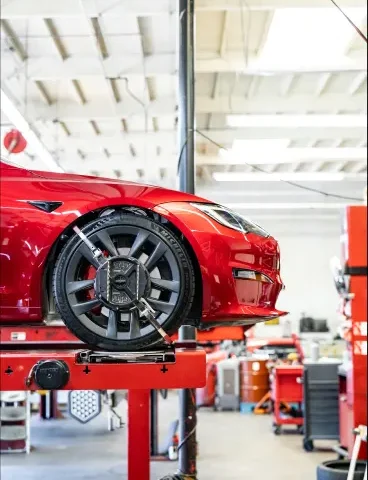
Many EVs, including the Tesla Model 3 and Model Y, use significant negative camber. Small toe errors on top of that can wear the inner edges quickly. A precise Tesla alignment helps.
4. Regenerative braking
Regen slows the car through the drive wheels. It saves brake pads but adds a little extra wear to the tires that do the work.
How to make EV tires last longer
- Rotate often. Every 5,000 to 7,000 miles evens out wear on non-staggered setups.
- Keep pressure correct. Check monthly. Underinflation is a big cause of early wear.
- Align yearly and after any hard impact.
- Choose EV-rated tires with the right load index.
- Drive smoothly. Save launch mode for special occasions.
Do you need EV-specific tires?
You need tires with the correct size, load rating and speed rating. EV-specific tires often add lower rolling resistance for more range and foam inserts for a quieter cabin. They are a great choice, but not always required. We will explain the trade-offs for your car.
The U.S. Department of Energy shares more ways to maximize EV efficiency.
Get help when your EV tires wear faster than expected
If your EV tires wear faster than they should, bring your car to our Irvine shop. We will check alignment, pressures and tread patterns. Then we will recommend the right fix, from an alignment to a new set of tires. See our guide to the best tires for the Tesla Model Y.
Written by the WTC service team
Wheel & Tire Connection is a tire, wheel and alignment shop in the Irvine Auto Center, serving Irvine, Lake Forest and South Orange County.